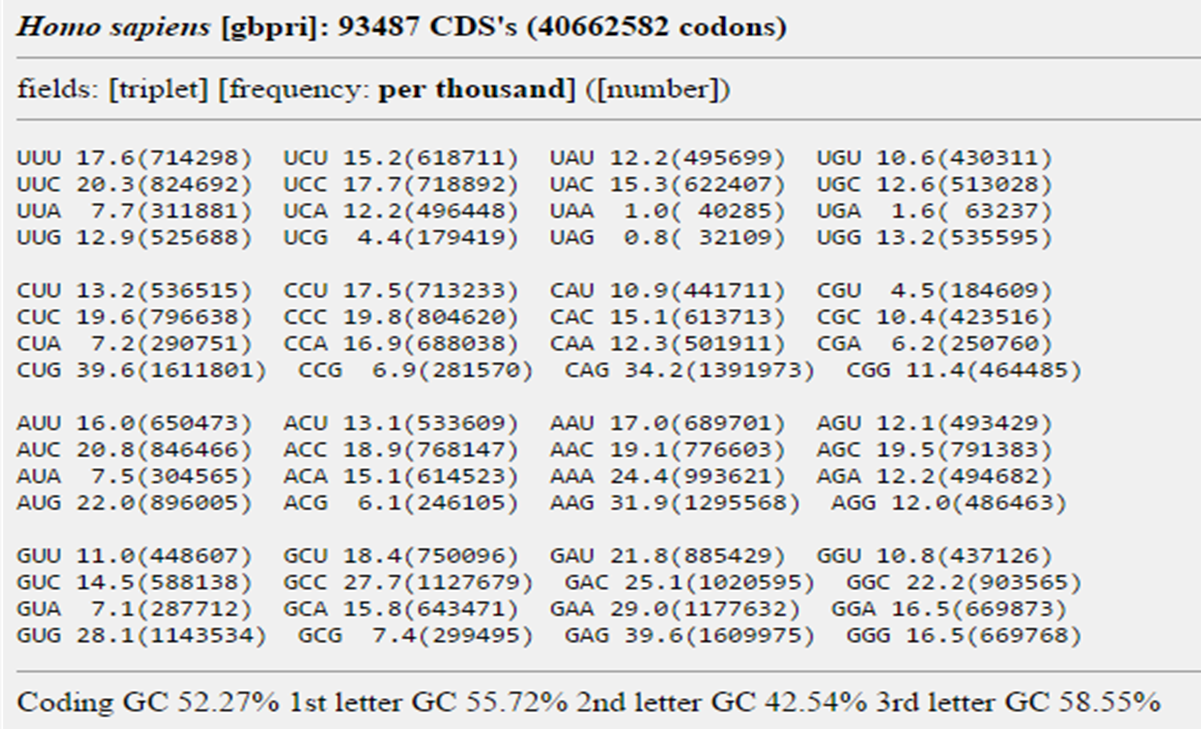
Human codon usage table
In the field of bioinformatics or computational biology, the concept of gene prediction is used to identify genomic regions that code for genes. With the advent of genome sequencing methods in the 21st century, it became more and more apparent to use the genome assemblies from the large amount of genomic sequences to aim to identify novel protein-coding genes. To find out more about the sequencing progression and its relation to gene prediction, you can check: http://www.nature.com/nrg/journal/v13/n5/full/nrg3174.html. This process of gene identification is more difficult to perform in eukaryotes than in prokaryotes. Mainly due to the split nature of eukaryotic genes and the exon-intron complexities, which are difficult to predict. Also, in the vertebrate genomes less than 2 % codes for proteins. The currently available computational methods are not yet powerful enough to precisely determine the gene structure from a large-genomic sequence. Therefore, gene predictions mainly rely on the compositional bias (the altered composition) of nucleotides and amino acids in protein-coding regions and on the similarity with known coding sequences. These gene predictions, when no additional information is available (e.g. cDNA sequence data), can be considered highly hypothetical.
To identify the location of genes in genomic sequences, multiple approaches can be applied:
Ab initio methods, also known as intrinsic, are performed through signal and content searching, without the direct comparison to other sequences. With many exon predictions, one can assemble a gene structure. This process is defined as dynamic programming (e.g. GeneID). Hidden Markov Models (HMM) make it possible to define highly complex patterns (e.g. GENSCAN, which is HMM-based). Both dynamic programming and HMM are intrinsic methods for gene prediction. Extrinsic methods are homology-based.
In eukaryotes, one can identify and score suitable splice sites, and, start and stop signals in the query sequence to predict candidate exons. Exons are scored as a function of the signals, which are used to detect the exons and based on the coding statistics, performed on the putative exon sequence itself. In homology-based exon/gene prediction a score is given, which represents the quality of the alignment of the query sequence and the known coding sequence or unknown genomic sequences. Thereafter, multiple candidate exons can be assembled into a predicted gene structure.
Gene prediction through intrinsic methods is based on statistical characteristics of a query sequence.
An exon can be identified by searching for certain exon defining signals in the sequence:
Multiple exon types can be distinguished with each their typical characteristics:
These signals are typically detected through the use of Position Weight Matrix (PWM), which represents on each position a chance of each nucleotide (A,T,C,G) in percentages. These are calculated from a set of known functional signals and these are used to compute the position of any putative functional signals, which are described above, in the query sequence.
Since different codons are used in exons than in introns, one can also use codon/coding statistics to predict and score exons. These codon statistics can be based on the codon usage, hexamer frequencies and markov models.
To perform codon statistics one can use a codon usage table (http://www.kazusa.or.jp/codon/). This table displays the frequency of all the possible codons that code for amino acids in all human coding regions. Based on these frequencies one can determine whether the observed codon(s) are likely to be coding or not by comparing it with the frequency of random codons, which would mean the codon(s) to be non-coding.
Human codon usage table
Let's consider two codons, AAA GAG, and try to figure out if this combination of these two codons are more frequent in coding regions than by chance.
We will calculate the probability of the two codons to be coding:
P = F(AAA) x F(GAG) with P: probabilty and F: frequency
The frequencies of these codons we can find in the codon usage table for human and are per thousand:
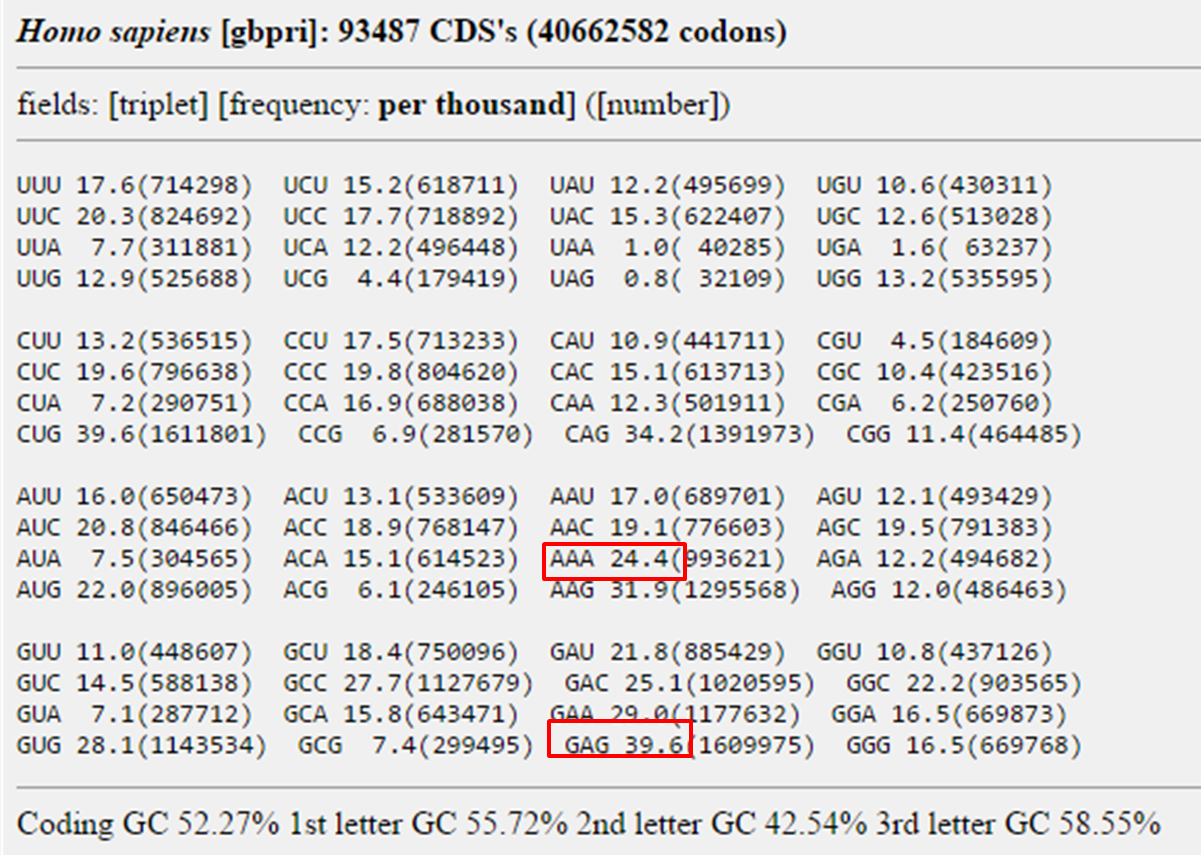
Human codon usage table
P = 0.0244 x 0.0396 = 0.00096624
Let's calculate the probability if the codons are random:
There are 64 codons available, so the frequency of each codon if they are random is 1/64.
P = 0.0156 x 0.0156 = 0.000244
The likelihood ratio LR = 0,00096624/0,000244 = 3.96
This implies that the combination of two codons (AAA GAG) are ~ 4 times more likely to be part of a coding region than non-coding.
The log-likelihood ratio LLR = log(3.96) = 0.60
LLR > 0: coding
LLR < 0: non-coding
For many other species such a codon usage table also exists.
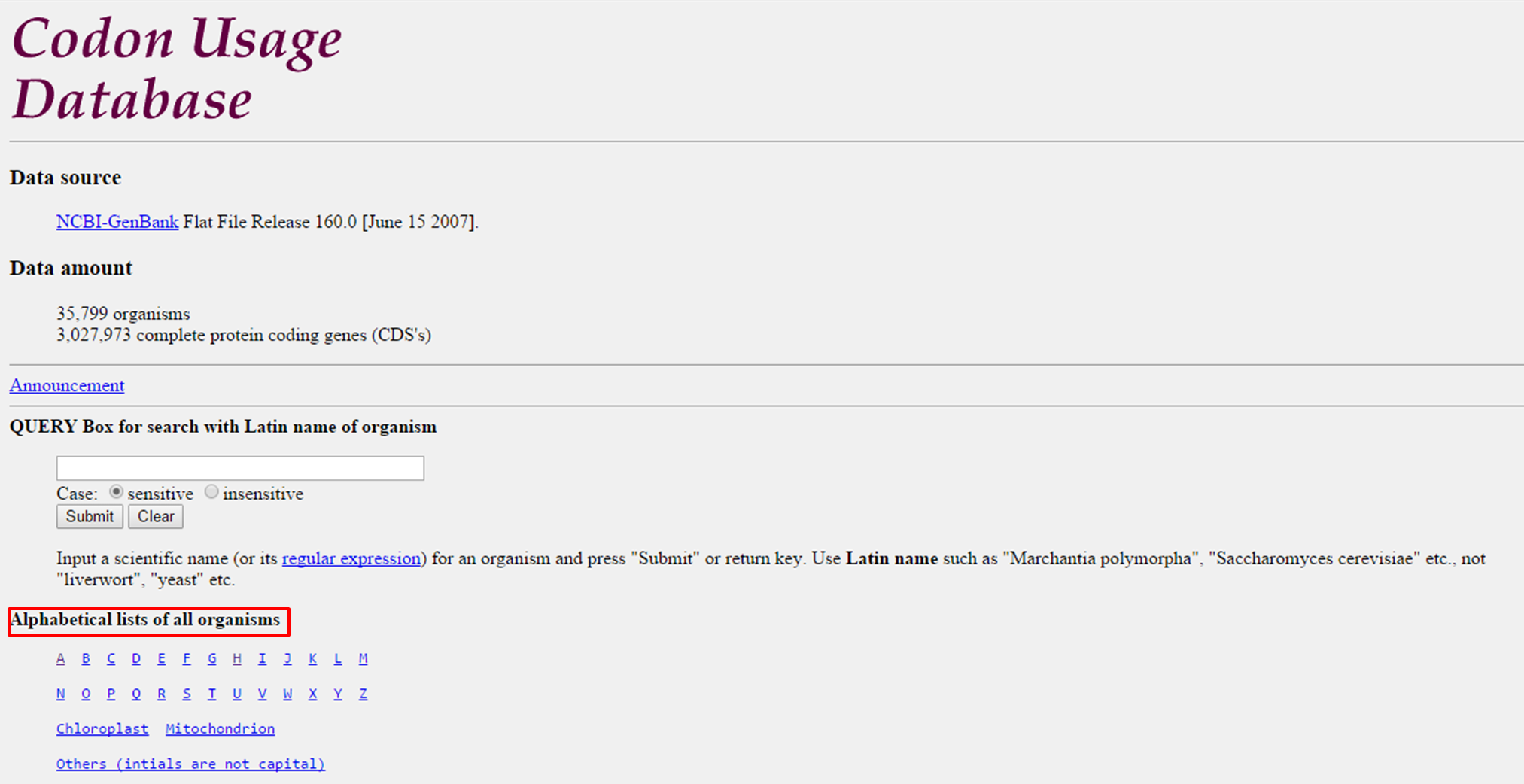
Codon Usage Database
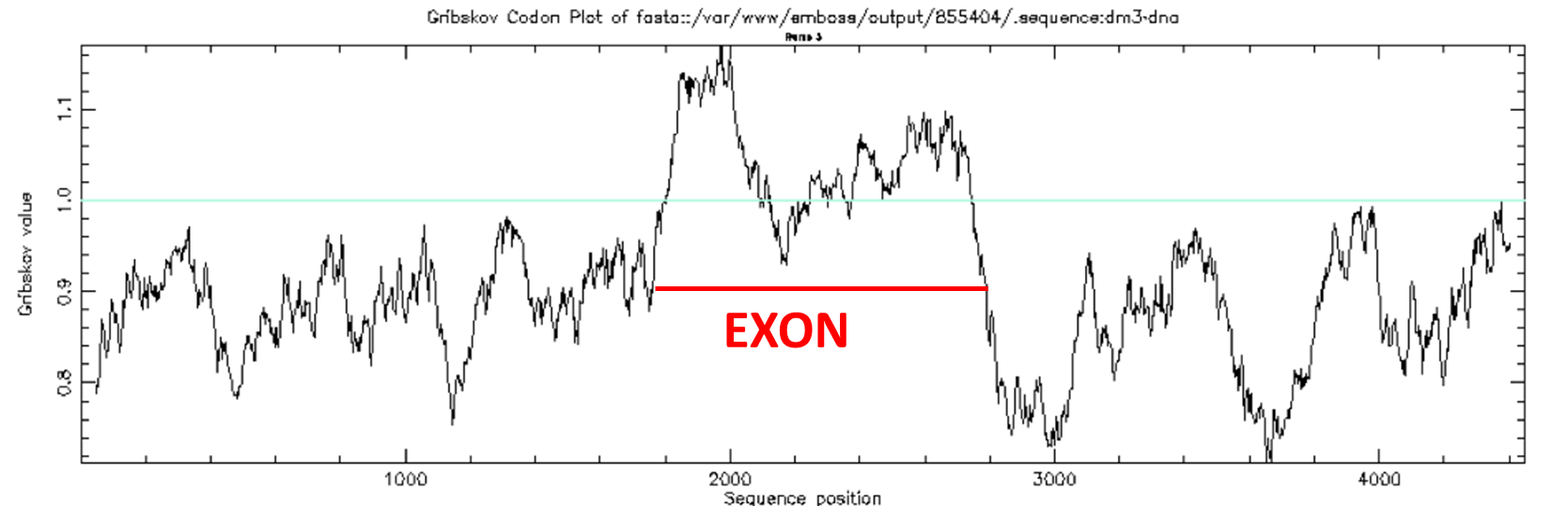
Codon Usage plot
Besides using codon frequencies to determine whether a certain sequence is coding or non-coding, one can also use the observation of a periodic correlation between nucleotide positions to perform predictions.
Basically, there is a relation observed between the reoccurence of the same nucleotide at certain positions. This relation shows a periodic pattern. For example, for the nucleotide A at a given position in a sequence, subsequent A nucleotides show a period-3 pattern. More information about these periodic correlations between nucleotide positions can be found in the chapter 'DNA Composition, Codon Usage and Exon Prediction' of Genetic Databases by M.J. Bishop et al. Academic Press. 1999. which is available online: http://genome.crg.es/courses/SeqAnalysis/GeneIdentification/SearchContent/.
Gene prediction can also be performed through sequence similarity of the query sequence with the sequence of annotated genes in a database. For example, translated nucleotide sequence can be querried against protein databases (BLASTX, see Chapter 6: Alignments). This homology search can be combined with ab initio methods for gene prediction, e.g. GeneID and GenomeScan. With the use of Expressed Sequence Tags (ESTs) one can also identify protein-coding genes. These can be mapped by BLAT or BLASTN (see Chapter 6: Alignments). Comparative gene prediction can also be applied, since protein-coding regions tend to be more conserved than non-protein coding genes in the genome, e.g. Twinscan and slam, whereby exons are scored and the probabilistic models for comparative results is also taken into account.
GeneID is a program that predicts genes in genomic sequences by using a hierarchical approach (http://genome.crg.es/software/geneid/). First, splice sites, start and stop codons in the sequence are predicted and scored with PWMs. Thereafter, exons are defined by using the predicted exon signals from the first step. Exons are scored through a combination of the sum of scores for the exon defining signals and the coding statistics for the exons. Finally, from the predicted exons a gene structure in such a way that the scores from the previous steps are combined to the maximum possible total score. The most recent version incorporates sequence similarity, experimental data or data obtained from other computational predictions (e.g. ESTs).
GeneID is available on the command-line of the teaching server (bmw.gbiomed.kuleuven.be) or via a web server: http://genome.crg.es/software/geneid/geneid.html
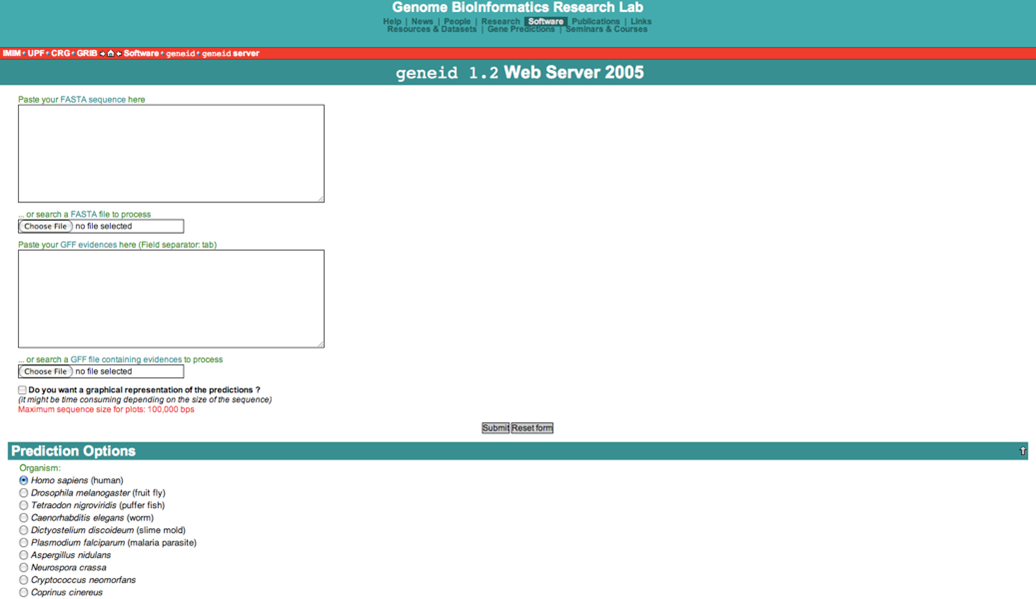
GeneID web server
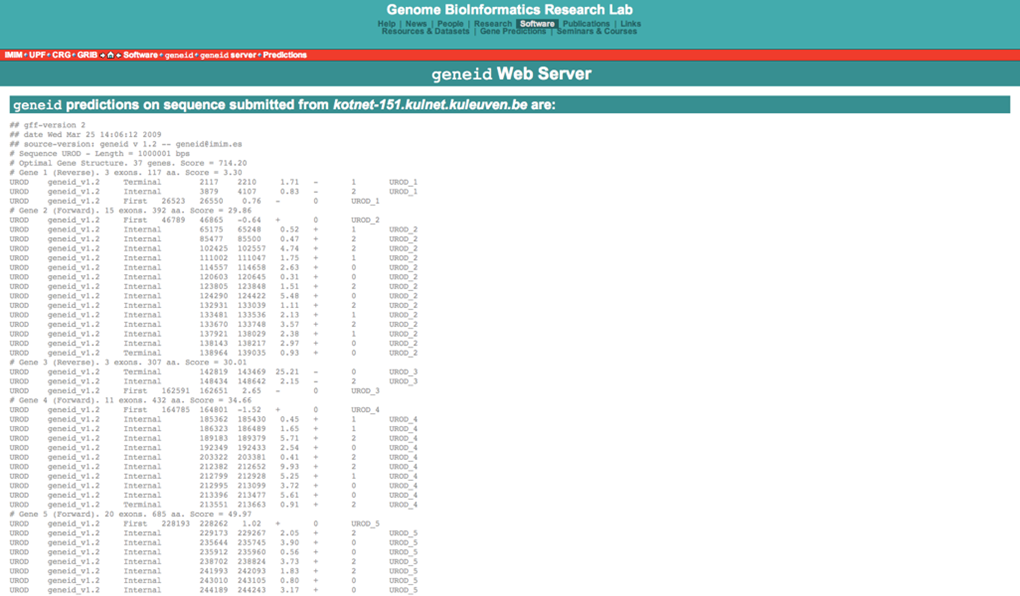
GeneID web server output
For GeneID sequence in a FASTA format is used as an input file. Output can be obtained in a geneid, xml or GFF format.
For more details, use online manual (http://genome.crg.es/software/geneid/docs) or via the command-line:
geneid -h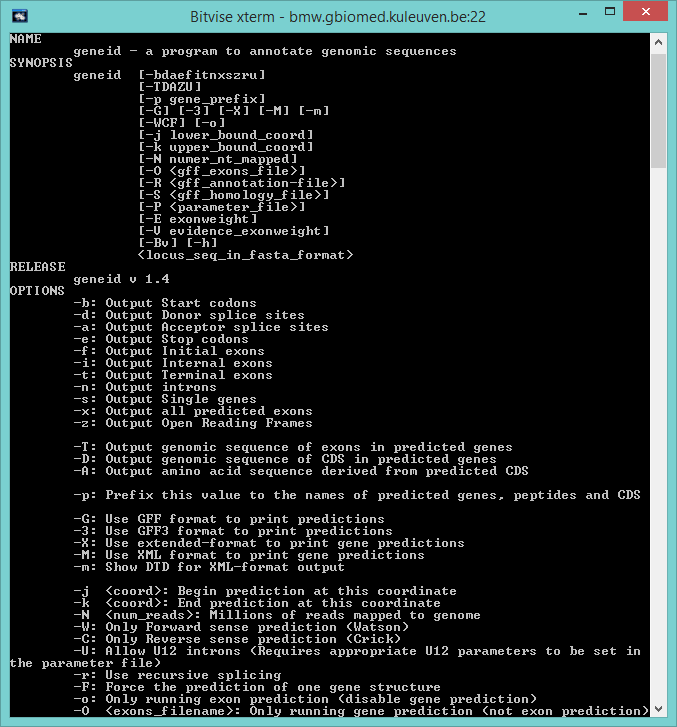
GeneID help
How reliable are the gene predictions? To estimate the accuracy, several measures are used:

Overview of accuracy measure definitions in predictions
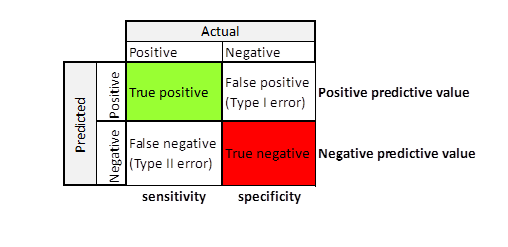
Overview of accuracy measures for predictions
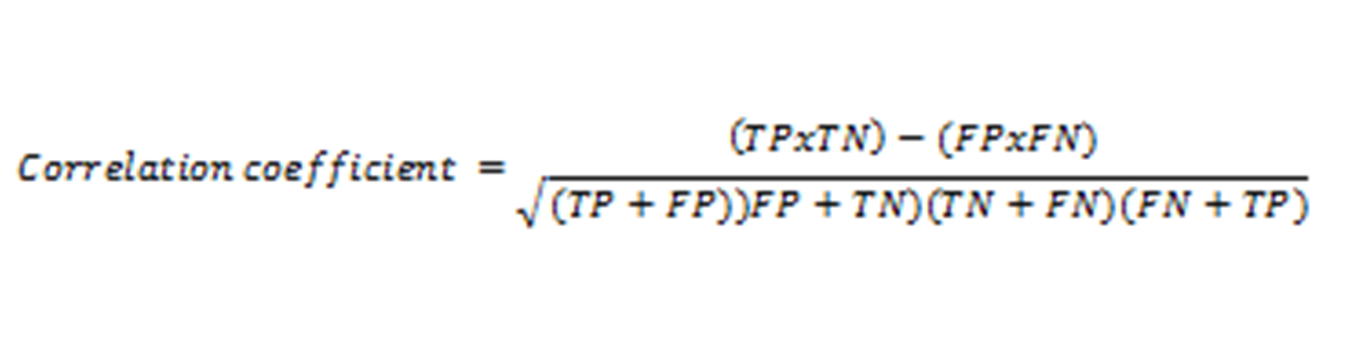
Correlation coefficient